Authorsambit
  • Home
  • Books
  • Bio
  • News & Events
  • Contact
  • Blog

All Kaal None : Sac of Surpas – Part 1 of the trilogy: a romantic sci-fi thriller of epic proportion

August 29, 2021 by sambit Daspatnaik

Do you want to read a sci-fi book that runs through different timelines and parallel universes? A book that takes you through a journey of a romantic relationship between the purebred rep and his consort sent for a divine purpose? The main protagonist, a hybrid rep oscillates between his supreme and demonic tendencies, hybrid as he is who is tied between his promised one and his destined consort.

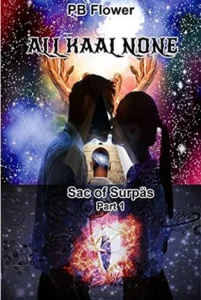
So, here’s a romantic sci-fi thriller ‘All Kaal None : Sac of Surpas – Part 1 of the trilogy’, written by Suman, with the pen name PB Flower, that takes you into a roller coaster ride through multiple timelines, parallel universes, time dilation and different civilizations across the space time continuum. The most beautiful part is the way the author explains and refers to the genesis, the preservation and the end of the universe in a contemporary style. The fundamentals on creation, preservation and destruction by the trinity, including several life lessons for individuals and those in relationships are beautifully explained by referring to the ancient Indian Texts such as Shrimad Bhagavatam, the Upanishads and the Puranas with some references to the ancient epics such as the Mahabharata.

The book also questions the dilution of the beings in this universe due to cross breed with reference to the Samudra Manthan, the churning of the galaxies as rendered in the Indian puranas that resulted in the perpetuity of the Devas, referred as Demi-Gods and the degradation of the asuras, also referred as the Demons.

The book covers time through eons. Right through the protagonist’s embryonic development to his utilization of the learnings that he gets in the Shala with a scientific approach in a more realistic and skewed universe, the author has dealt with each aspect in detail. Again, the impartment of learning at the Shala is explained in technical terms and could be very well related to that of the ancient Indian gurukul system.

The romantic sci-fi thriller is unique with the complexity of the relations explained not just due to human limitations, but also due to the factors involving the concept of superior beings, mercreatures, hybrids that are good and those that have demonic intentions and an interesting communication through the galaxies by these so called extra terrestrials. The book also looks at aliens with a very different perspective.

The author has dealt with these concepts in depth, in a unique way and yet kept a racy style in her writings. I could also feel a tinge of Sir Isaac Asimov’s style of writing in certain areas where the readers need to read between the lines.

The part 1 of this trilogy ends with a twist leaving the readers asking for more.

To sum it up, this is a romantic sci-fi thriller of epic proportion available for all to devour that results in a quest for more in its subsequent parts in the trilogy.

The book is available on Amazon.

Filed Under: Featured Books

The Celestine Prophesy – A Spiritual Sojourn

August 8, 2021 by sambit Daspatnaik

I read the book, The Celestine Prophesy by author James Redfield, long time back. And the impressions still remain as one that provides a profound insight into the steps that help reach the spiritual pinnacle in one’s life. The life lessons around spirituality are imbedded through a beautiful fiction. The reader adventures through the rain forests of Peru along with the protagonists to experience this unique journey. I was compelled to compare this work with that of Hermann Hesse who authored the book Siddhartha.


One unique thing about this book is, it is one of the self published books that made it to the number one American #bestseller and now famous all over the world. The author had taken immense effort to publicize and promote his book all by himself. And mind you. This was prior to the time when internet and social media caught up.

This serves as an #inspiration to all #selfpublished authors.


To sum up, it’s a beautiful read for all those seeking #adventure and #spirituality.


Filed Under: Featured Books

Chilika, a Mesmerizing Tourist Spot

August 1, 2021 by sambit Daspatnaik


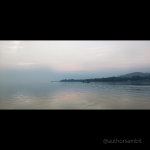
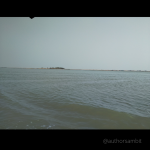
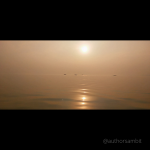
Chilika Lake is the largest brackish water lagoon in the world, spread over the Puri, Khurda and Ganjam districts of Odisha state on the east coast of India, flowing into the Bay of Bengal, covering an area of over a thousand square kilometer. It is also the largest coastal lagoon in India and wintering ground for migratory birds in the Indian subcontinent and is listed as a tentative UNESCO World Heritage site.


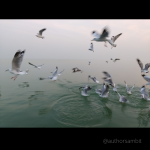
The lagoon hosts over hundreds of species of birds in the peak migratory season from as far as the Caspian Sea, Lake Baikal, Aral Sea and other remote parts of Russia, Kirghiz steppes of Kazakhstan, Central and southeast Asia, Ladakh and the Himalayas. Some of the birds travel as much as nearly 12,000 km to reach Chilika Lake.


The lake has numerous islands. The larger islands, separated by shallow channels, lie between the barrier and the main body of the lake. The six major islands are Parikud, Phulbari, Berahpura, Nuapara, Nalbana, and Tampara.


Nalbana Island is the core area of the Ramsar designated wetlands of Chilika Lake. Nalbana means a weed-covered island In the Odia language. It is a major island in the center of the lake.


Birds’ island, located in the southern sector of the lake has huge exposed hanging rocks. These rocks are naturally painted white due to folic acid of the droppings of the birds and is known primarily for migratory birds in winter. These rocky mountains are known locally as Chadhei Haga Pahada (Mountain covered with Bird’s droppings).


Kalijai Temple located on an island is considered to be the abode of the Goddess Kalijai. This temple is located at a hill which is surrounded by blue waters. Local people of Chilika refer to the Goddess as the reigning deity of the lagoon.


Satapada village, at the new mouth of the lake, provides a splendid view of the Lake and the dolphins.

The Irrawaddy dolphin (Orcaella Brevirostris) is the flagship species of Chilika lake. Chilika is home to the only known population of these dolphins in India and one of only two lagoons in the world that are home to this species. You can witness the dancing and playing dolphins during the boat ride into these parts of Chilika.

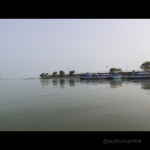
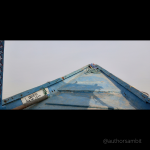
Hundreds of boats here provide tours of the lake for tourists. The beautiful scenery in the midst of the lake water surrounded by mountains is just mesmerizing.


Other famous sites in Chilika are:

Parikud: A group of composite islands for nature lovers and provides an avian spectacle during winter season.

Barunkuda, a small island situated near Magarmukh, the mouth of the lake, has a temple of Lord Varuna.

Nabagraha is an ancient deity located along the outer channel.

Chourbar Shiva Temple is located near Alupatna village, along the outer channel.

Sand-Bar and Mouth of the Lake towards the sea is a striking and un-explored stretch of 30 km of empty beach across the sand bar which separates the Lake from the Sea.


Photographs by Sambit Daspatnaik

Filed Under: Trivias

Konark Sun Temple, a remarkable architecture

July 17, 2021 by sambit Daspatnaik

The Konark Sun temple in Puri Odisha is an example of a wonderful architecture, extremely detailed sculpting and a monumental piece full of mystery. Part of the temple ruins still stand and have witnessed the changing time through centuries.

So what’s so special about this temple? In fact, there are many. Right from its construction, its location, the information depicted on the temple walls, the inside content of the temple, right up to its destruction. So, let me give you some info around this:


Construction & Location:

It is believed that the original Sun temple at Konark was built by Samba, Lord Krishna’s son, who was cursed by Lord Krishna Himself. Samba developed leprosy. But later after Lord Krishna came to know about the confusion created by Sage Narada, He could not reverse the curse but advised Samba to pray to the Sun God (Surya deva) to cure him of the ailments. He advised him to go to Puri, Odisha near the river Chandrabhaga to pray the Sun deity at a specific point where the first ray of the Sun fell on the seacoast. Samba witnessed the divine appearance (darshan) of Lord Surya, got cured and built the magnificent Sun temple at the same location as a mark of gratitude.

For this reason, Samba Dashami is celebrated amongst Hindus and popularly in Odisha to make food offerings to please the Sun God on the 10th day of the waxing moon phase (Shukla paksha) in the Dec – Jan time frame (Pausha month as per Hindu Calendar) during the beginning of Summer Solstice (Uttarayan).

The present-day temple was built by King Narasimhadev I, in the 13th century, of the Ganga dynasty. However, there are speculations that the temple was built much before that. Also, there are no clear reasons as to why he had to rebuild it.

Though the temple was originally built well inside the sea at a precise astronomical position, the sea has since then retreated and at present is around 5 kms away from the temple.


Structure:

The Original main temple structure was over 220 feet high.

The uniqueness of the Sun Temple of Konark lies in the fact that it was built with an architectural setup of various magnets that helped balance a huge iron ball in thin air representing the Sun God in the sanctum sanctorum. The idol of Sun God had a diamond that reflected the rays of the Sun, hence the name KoN-ark. Though there are different explanations for the name Konark.


The entire temple is made in the form of a huge chariot of Sun God with 24 wheels (12 pairs). The Konark wheel has been the primary attraction of the temple. The wheels of the chariot are exquisitely decorated around their axles and peripheries. The chariot is pulled by seven horses.

The seven horses are named after the seven colors (VIBGYOR):

Sahasrara (Violet), Indra-nila (Indigo), Nila (Blue), Haritaha (Green), Pita (Yellow), Kausumbhaha (Orange) and Rakta (Red). This is indicative of the fact that the Sun’s rays break into seven colors after passing through a prism.


Though the carvings on the temple walls are popularly referred to the sensual enjoyment (Kama), if observed minutely, the carvings shows the different stages of life starting from childhood phase at the base, adolescent, adult phase at the center which is normally visible to the normal view of the eyes, and the old age at the higher pedestals of the temple. There are also depictions of mythical beings, birds and animals.


Destruction:

There had been several reasons for the destruction of the temple. The magnetic pull of the temple was so strong that it used to disrupt the magnetic compass of the ships going through that route. Konark at that time was a flourishing trade city and a major port at that time. The Portuguese removed the main magnet. This resulted in the collapse of most of the temple structure.

The temple was further destroyed due to several invasions by Kalapahada, the Islamic ruler.


Present Condition:

At present only the Natya Grah exists in ruins. The present structure is filled with rocks and sand to prevent it from caving in. The temple was declared a World Heritage Site by UNESCO in 1984.


To summarize:

The temple is one of the most magnificent architectural feats undertaken in India. The ancient sears, wise men and builders in ancient India had comprehensive knowledge of Astronomy, Architecture and Electromagnetism, due to which the constructions were done at precise locations for the benefit of mankind.

There are many Sun temples in India as well as across the world. The question to ponder is:

Were the ancient civilizations connected through a common thread?


Photography: Sambit Daspatnaik

Filed Under: Trivias

When the Gods travel to visit Their Devotees

July 12, 2021 by sambit Daspatnaik

What doesn’t God do for His devotees? He cares for His devotees; He takes their suffering upon Him; He comes out of the temple and visits them so that they can touch Him, feel Him, serve Him.

One such example is of Lord Jagannath’s ardent devotee Madhav Das, who would serve Lord Jagannath all by himself in the Jagannath temple of Puri, Odisha. Madhav Das used to live alone and serve the Lord. Whenever Madhav Das was alone, Lord Jagannath (the eternal Lord Vishnu Himself) would spend time with him and give him company. Once Madhav Das fell terminally ill, so the Lord Himself came to serve Him, so that Madhav Das won’t have to be born again to complete his karmic cycle to bear the fruits of his good deeds. The Lord took his devotee’s 15 days of suffering upon him and fell sick Himself. So, for 15 days the temple doors were closed. This was the time when the temple priests and His devotees would offer Him with fruit juices, porridge and Ayurvedic medicines. Since then, every year the temple doors would remain closed for these 15 days when the Lord becomes unwell. This is also the time, when the idols of Lord Jagannath, His brother Lord Balabhadra (Balaram) and His sister Goddess Subhadra are re-painted.

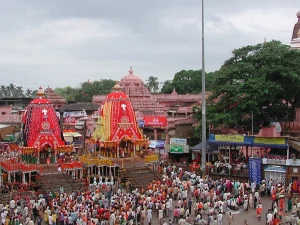
After 15 days, the Gods come out of the temple in all Their splendor, riding their chariots to visit Mausi Badi (Their Aunt’s temple) known as Gundicha temple. The Rath Yatra or car festival is held during the Hindu month of Asadha (June–July), attracting thousands of devotees and visitors each year. On their way in the chariots, they give an open darshan (view) to all Their Devotees. This is the time, when the devotees get a chance to pull their chariots using choir ropes tied in front of the vehicles. The devotees offer their seva (services) through various food offerings of their choice. They offer their performing arts, such as telengi baja (rhythmic beating of gongs), banati khela (acrobatics), nagarakirtan (public singing and dancing) including Gotipua, one of the oldest in the list of traditional dances.

Thousands of devotee flock to Puri every year to attend the Jagannath Rath Yatra. The centuries-old chariot procession is not only a religious ritual but also a display of the Jagannath consciousness that has long enriched the cultural heritage of Odisha.

The Rath Yatra festival is celebrated in Jagannatha temples across India, South East Asia and various parts of the world.

This image is licensed under the Creative Commons Attribution 2.5 Generic license.

Photographer: G.-U. Tolkiehn

Image source in: wikipedia. https://commons.m.wikimedia.org/wiki/File:Rath_Yatra_Puri_07-11027.jpg#mw-jump-to-license

Filed Under: Trivias

  • « Previous Page
  • 1
  • …
  • 3
  • 4
  • 5
  • 6
  • 7
  • …
  • 9
  • Next Page »

Enter your email address to subscribe and receive new post notification on your email

[newsletter]

© 2023 by Sambit Daspatnak

www.authorsambit.com