Authorsambit
  • Home
  • Books
  • Bio
  • News & Events
  • Contact
  • Blog

Was the ‘Cask of Amantillado’ inspired by the Castle Island in South Boston?

February 27, 2022 by sambit Daspatnaik

Nearly 5 years back, during my trip to the historical city of Boston, Massachusetts in the US, I got a chance to visit the tourist sites in this city. One of the tourist attraction was the cruise that took us on a ride on the Boston port that oversees the Massachusetts bay.

As one cruises along the Boston coastline, one gets the majestic view of the famous Castle Island, which is believed to be the source of inspiration for Edgar Allan Poe’s famous short story, ‘The Cask of Amantillado’ when he was a private stationed at Fort Independence on this very island in 1827.

Edgar Allan Poe was a 19th century American writer and poet. Across the world, he is best known for his short stories, particularly in the genre of mystery and horror.

So, the legend holds that the inspiration for ‘The Cask of Amontillado’ seems to have come from an allegedly true story that he himself had heard at Castle Island. According to this legend, Lieutenant Robert Massie was killed in a sword duel in 1817 by Lieutenant Gustavus Drane, following a dispute during a mere card game. The legend also mentions that the other soldiers took revenge on Drane by getting him drunk, luring him into the dungeon, chaining him to a wall, and sealing him in a vault. The historical records however prove otherwise, where Drane was acquitted of the charges and lived longer. Later, a skeleton was discovered on the island, which might have been been a source of inspiration for Poe.

‘The Cask of Amontillado’ is a tragic and haunting story that deals with the protagonist’s enemy being lured into a hidden chamber inside a fort after making him heavily drunk. The story at the end, gives a detailed description of the placement of the bricks, the motive of revenge, and the victim’s agonized moaning.

The Cask of Amontillado’ is one such story whose source of inspiration is still speculated until now.

Image source: Photograph by Sambit Daspatnaik. Copyright ©️ Sambit Daspatnaik. All Rights Reserved.
Filed Under: Trivias

Sankranti – A festival celebrated throughout the Indian subcontinent

January 14, 2022 by sambit Daspatnaik

https://authorsambit.com/wp-content/uploads/2022/04/file-1.mp4

Makar Sankranti or Uttarayan or Maghi or simply Sankranti is celebrated across the Indian sub-continent on the 14th of January every year.

The term Uttarayan refers to the summer Solstice while Dakshinayan refers to the winter Solstice.

While the summer Solstice begins from mid Dec, Sankranti marks the entry of Sun into Capricorn (makar) zodiac, which happens around mid of January every year and hence the term Makar Sankranti.

The concept of Uttarayan and Dakshinayan is well explained in the ancient Vedic texts that give importance to the worship of the Sun God to provide good health, energy and vitality to all living beings on the planet Earth.

This festival also marks the early stages of agricultural in most parts of India.

The festivities associated with Makar Sankranti are known by various names such as Magh Bihu in Assam, Maghi in Punjab, Maghi Saaji in Himachal Pradesh, Maghi Sangrand or Uttarain in Jammu, Sakraat in Haryana, Sukarat in central India, Pongal in Tamil Nadu, Uttarayan in Gujarat and Uttar Pradesh, Ghughuti in Uttarakhand, Dahi Chura in Bihar, Makara Sankranti in Odisha, Karnataka, Maharashtra & Goa. In West Bengal it is celebrated as Poush Sankranti. In Uttar Pradesh, it is called as Khichidi Sankranti. Uttarakhand celebrates it as ‘Uttrayni’, while Andhra Pradesh and Telangana celebrate it as Sankranthi.

In the Indian subcontinent, it is celebrated as Maghe Sankranti in Nepal, Songkran in Thailand, Thingyan in Myanmar, Mohan Songkran in Cambodia.

The reference of Makara Sankranti is also mentioned in the ancient Itihasa or epic, the Mahabharara, as Magha Mela.

The festival is celebrated amongst Hindus by making sticky bound sweets particularly from sesame (til) and a sugar base such as jaggery (gud, gur). This type of sweet is a symbolism for being together in peace and joyfulness, despite the uniqueness and differences between individuals. The sweet is usually called as Til gur. The celebration is associated with kite flying, savouries and praying to fire.

Makara Sankranti is an important pan-Indian solar festival, known by different names though observed on the same date, symbolizing and wishing good health, success and prosperity for the entire world.

Wishing you all a very happy Makara Sankranti.

Image source: internet and further animated.

Filed Under: Trivias

Samba Dashami, a festival for good health

January 12, 2022 by sambit Daspatnaik

Samba Dashami (pronounced as Saambo Doshomi) is a unique festival celebrated mostly in the state of Odisha, India on the 10th day of the Shukla Paksha of Pausha Masa (as per Hindu calendar) which is the 10th day of the waxing phase of the moon in the month of January.

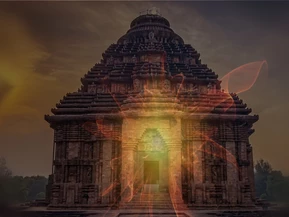
According to legend, Samba, the son of Lord Krishna, was afflicted by leprosy. He did penance and prayed to the Sun God continuously for 12 years. The venue he chose was Konark near the sea beach at Puri, Odisha. This was a unique point where Sun’s rays are believed to have maximum healing powers. He finally got cured by the Sun God. It is believed that he built the vast Konark Sun Temple that is a technical marvel of Ancient India. What remains of the temple today are only the ruins at the entrance.

In remembrance of this event, on this day, mothers pray to Surya Devta for the health of their children.

The women in the family wakeup before sunrise. After bathing, they prepare favorite dishes that are attributed to each family member, especially children and offer it to the Sun God. Some of the unique food items prepared are a set of cake-like dishes called pitha (cake), which includes manda pitha, kakara pitha, poda pitha, arisha pitha. Other interesting food items prepared on this auspicious day in Odisha are biri laddoo, makar chaula, chhenaguda, khiri, rasagulla and chhenagaja and many more delicious dishes.

Wishing you all good health and a happy Samba Dashami.

Image source: free pic from pixabay

Filed Under: Trivias

Tulsi Pujan Diwas

December 25, 2021 by sambit Daspatnaik

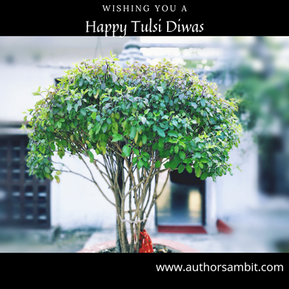
On December 25th, Tulsi Pujan Diwas is celebrated in India and its sub continents. On this day, Tulsi the holy basil plant, is worshipped and also planted. Tulsi plant is prayed by Hindus at the doorstep of every house on a daily basis as a ritual due to its several health benefits.

Tulsi is considered to be a blessing for good health.

Tulsi tea is consumed to treat the common cold and flu.

Regular intake of Tulsi leaves helps in preventing cough. (Many herbal cough and cold medicines have Tulsi extract as one of the components.)

Tulsi cures many diseases according to Ayurveda

Quoting Shyamkant Padoley, an eminent botanist.

“Tulsi gives out oxygen for 20 hours and ozone for four hours a day along with the formation of nascent oxygen which absorbs harmful gases like carbon monoxide, carbon dioxide and sulphur dioxide from the environment”.

Hence on this festival, Tulsi plant is worshiped so as to gain spiritual and health related benefits. People are encouraged to grow Tulsi plant in their home so that our environment can be benefited.

Happy Tulsi Diwas (Happy Basil plant day).

Image source: Photographed by Sambit Daspatnaik in Shanti Anand Ashram, Chilika, Puri, Odisha. All rights reserved.

Filed Under: Trivias

Kichakeswari Temple at Khiching

October 14, 2021 by sambit Daspatnaik


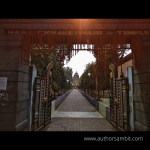
Chandrasekhara temple or commonly known as Khiching, an ancient temple of the Bhanja dynasty rulers of the Mayurbhanj district of Odisha, lies about 200 km from Baripada. This place is dominated by scores of temples of which many are still in active worship. The rest are mostly in ruins and form archaeological sites. The most important and key temple in this area is the Chandrasekhara temple, presided by the predominant deity of Khiching, Goddess Kichakeswari. She is the most sacred Goddess of the Mayurbhanj rulers and is still worshiped at present.

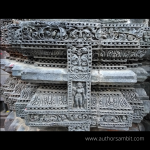
The temple is surprisingly present at a remote location surrounded by a thick jungle comprising of the Saal trees which is common in this area. The temple was built by the early Bhanja chief known as Kottabhanja or Digabhanja somewhere around the 11th century AD. However, looking at the temple architecture prevalent in ancient Odisha and the Chlorite slabs and Black stones used, the temple is believed to be far older.

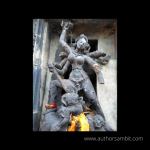
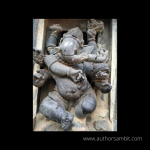
The temple is surrounded by beautiful sculptures and carvings of Lord Ganesha in a unique dancing pose, Goddess Durga killing the demon Mahisasura and many more.

A museum was built by Maharaja Purna Chandra Bhanja Deo, of the Bhanja dynasty in the year 1922 AD to help preserve the statues and ruins surrounding the temple.

One question that arises out of curiosity is that how come the temple was in the middle of such a deep remote jungle? Could there possibly be habitation around the temple in the remote past or was it purposely built at a specific location just like the Sun temple of Konark.

Photographs taken during the actual visit. All rights reserved.

Filed Under: Trivias

  • 1
  • 2
  • 3
  • Next Page »

Enter your email address to subscribe and receive new post notification on your email

[newsletter]

© 2023 by Sambit Daspatnak

www.authorsambit.com