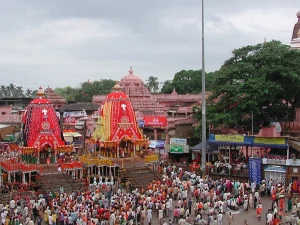
The Konark Sun temple in Puri Odisha is an example of a wonderful architecture, extremely detailed sculpting and a monumental piece full of mystery. Part of the temple ruins still stand and have witnessed the changing time through centuries.
So what’s so special about this temple? In fact, there are many. Right from its construction, its location, the information depicted on the temple walls, the inside content of the temple, right up to its destruction. So, let me give you some info around this:
Construction & Location:
It is believed that the original Sun temple at Konark was built by Samba, Lord Krishna’s son, who was cursed by Lord Krishna Himself. Samba developed leprosy. But later after Lord Krishna came to know about the confusion created by Sage Narada, He could not reverse the curse but advised Samba to pray to the Sun God (Surya deva) to cure him of the ailments. He advised him to go to Puri, Odisha near the river Chandrabhaga to pray the Sun deity at a specific point where the first ray of the Sun fell on the seacoast. Samba witnessed the divine appearance (darshan) of Lord Surya, got cured and built the magnificent Sun temple at the same location as a mark of gratitude.
For this reason, Samba Dashami is celebrated amongst Hindus and popularly in Odisha to make food offerings to please the Sun God on the 10th day of the waxing moon phase (Shukla paksha) in the Dec – Jan time frame (Pausha month as per Hindu Calendar) during the beginning of Summer Solstice (Uttarayan).
The present-day temple was built by King Narasimhadev I, in the 13th century, of the Ganga dynasty. However, there are speculations that the temple was built much before that. Also, there are no clear reasons as to why he had to rebuild it.
Though the temple was originally built well inside the sea at a precise astronomical position, the sea has since then retreated and at present is around 5 kms away from the temple.
Structure:
The Original main temple structure was over 220 feet high.
The uniqueness of the Sun Temple of Konark lies in the fact that it was built with an architectural setup of various magnets that helped balance a huge iron ball in thin air representing the Sun God in the sanctum sanctorum. The idol of Sun God had a diamond that reflected the rays of the Sun, hence the name KoN-ark. Though there are different explanations for the name Konark.
The entire temple is made in the form of a huge chariot of Sun God with 24 wheels (12 pairs). The Konark wheel has been the primary attraction of the temple. The wheels of the chariot are exquisitely decorated around their axles and peripheries. The chariot is pulled by seven horses.
The seven horses are named after the seven colors (VIBGYOR):
Sahasrara (Violet), Indra-nila (Indigo), Nila (Blue), Haritaha (Green), Pita (Yellow), Kausumbhaha (Orange) and Rakta (Red). This is indicative of the fact that the Sun’s rays break into seven colors after passing through a prism.
Though the carvings on the temple walls are popularly referred to the sensual enjoyment (Kama), if observed minutely, the carvings shows the different stages of life starting from childhood phase at the base, adolescent, adult phase at the center which is normally visible to the normal view of the eyes, and the old age at the higher pedestals of the temple. There are also depictions of mythical beings, birds and animals.
Destruction:
There had been several reasons for the destruction of the temple. The magnetic pull of the temple was so strong that it used to disrupt the magnetic compass of the ships going through that route. Konark at that time was a flourishing trade city and a major port at that time. The Portuguese removed the main magnet. This resulted in the collapse of most of the temple structure.
The temple was further destroyed due to several invasions by Kalapahada, the Islamic ruler.
Present Condition:
At present only the Natya Grah exists in ruins. The present structure is filled with rocks and sand to prevent it from caving in. The temple was declared a World Heritage Site by UNESCO in 1984.
To summarize:
The temple is one of the most magnificent architectural feats undertaken in India. The ancient sears, wise men and builders in ancient India had comprehensive knowledge of Astronomy, Architecture and Electromagnetism, due to which the constructions were done at precise locations for the benefit of mankind.
There are many Sun temples in India as well as across the world. The question to ponder is:
Were the ancient civilizations connected through a common thread?
Photography: Sambit Daspatnaik